Sensory
Garden
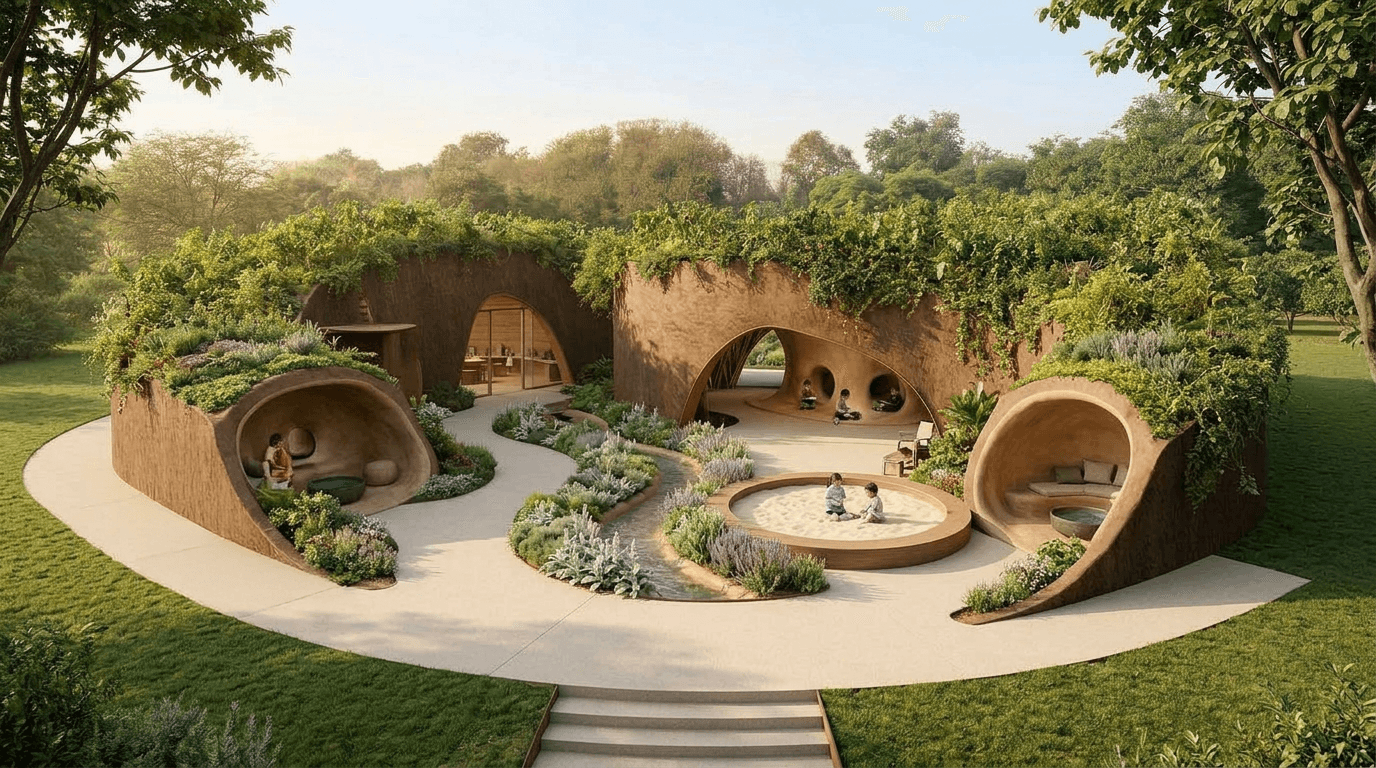
Sensory garden pavilion concept for autistic children 2026
Sensorial
Design
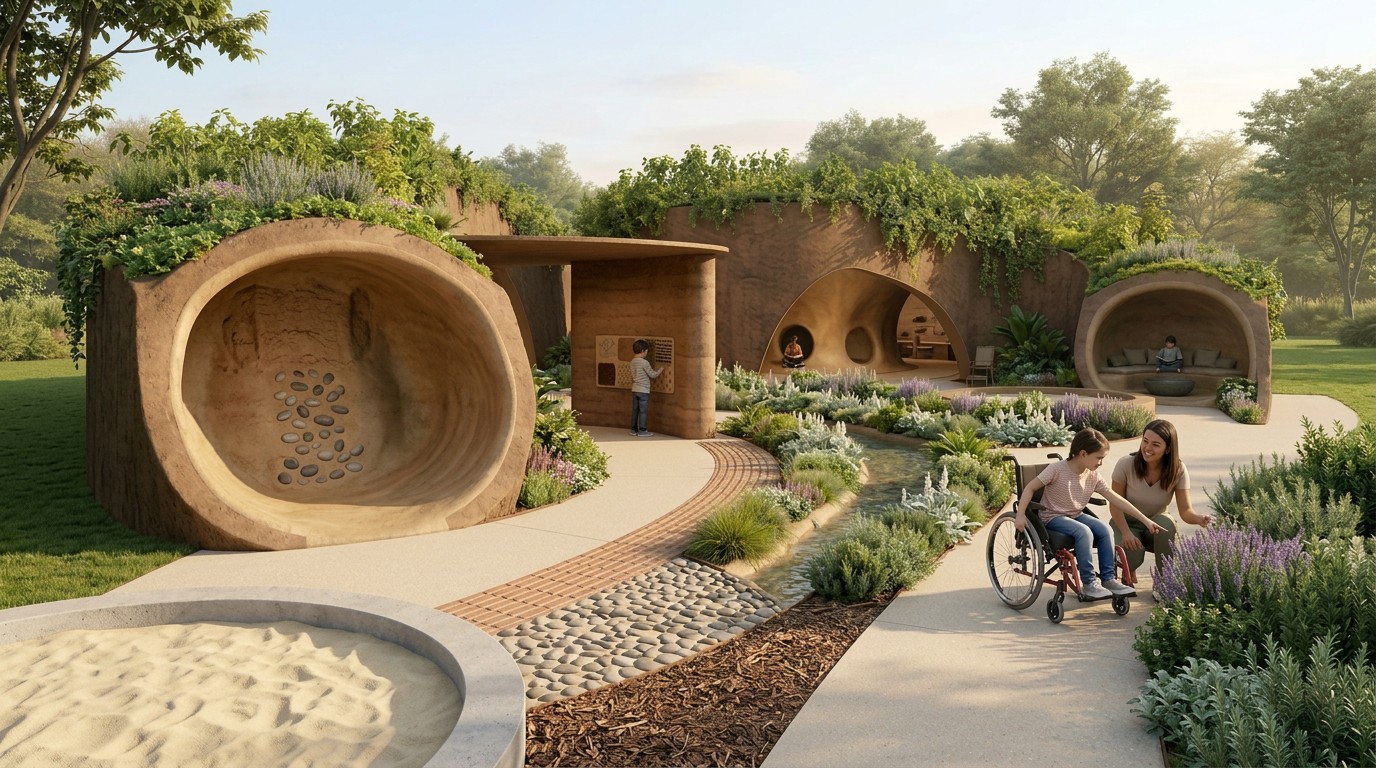
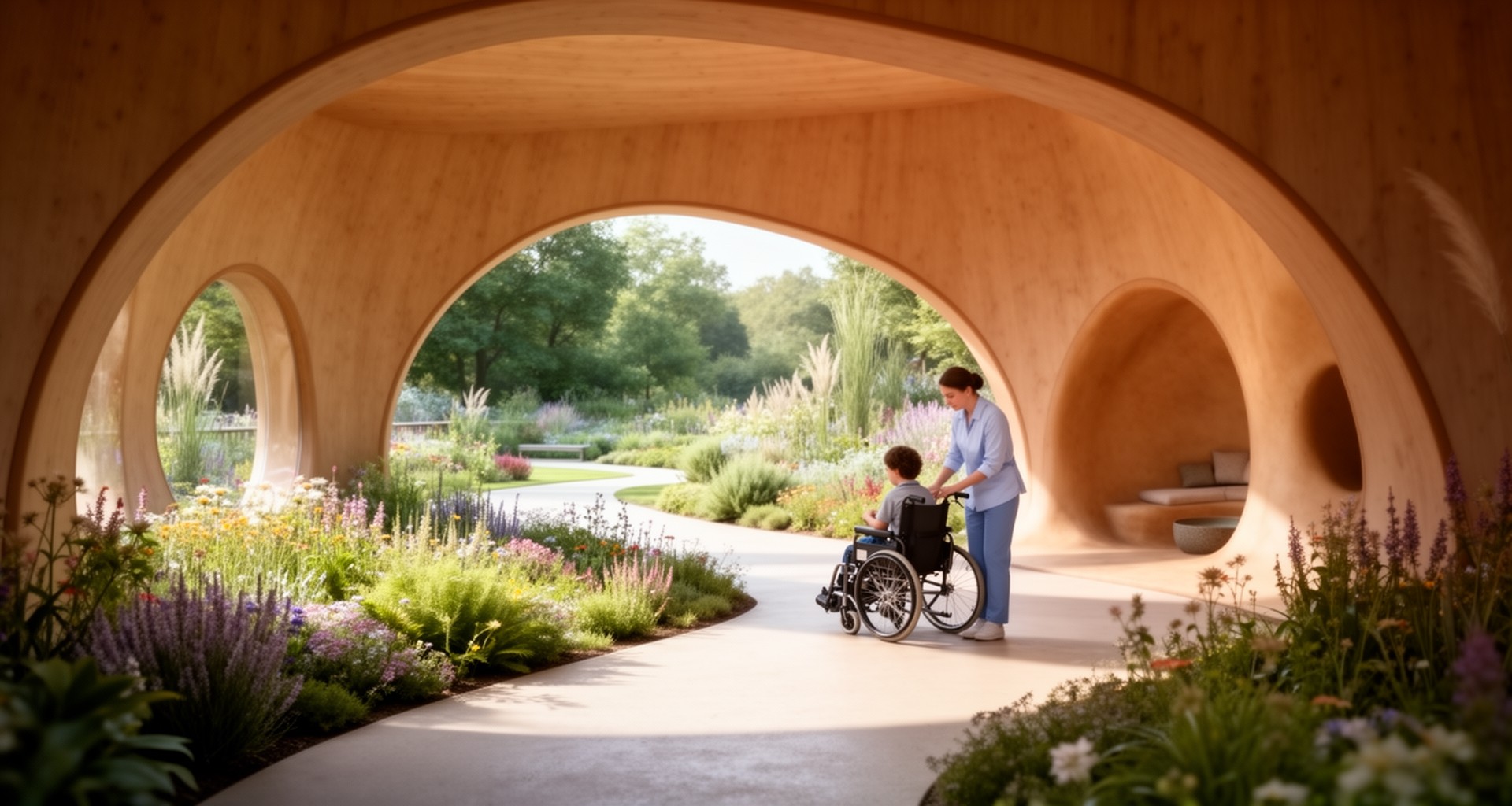
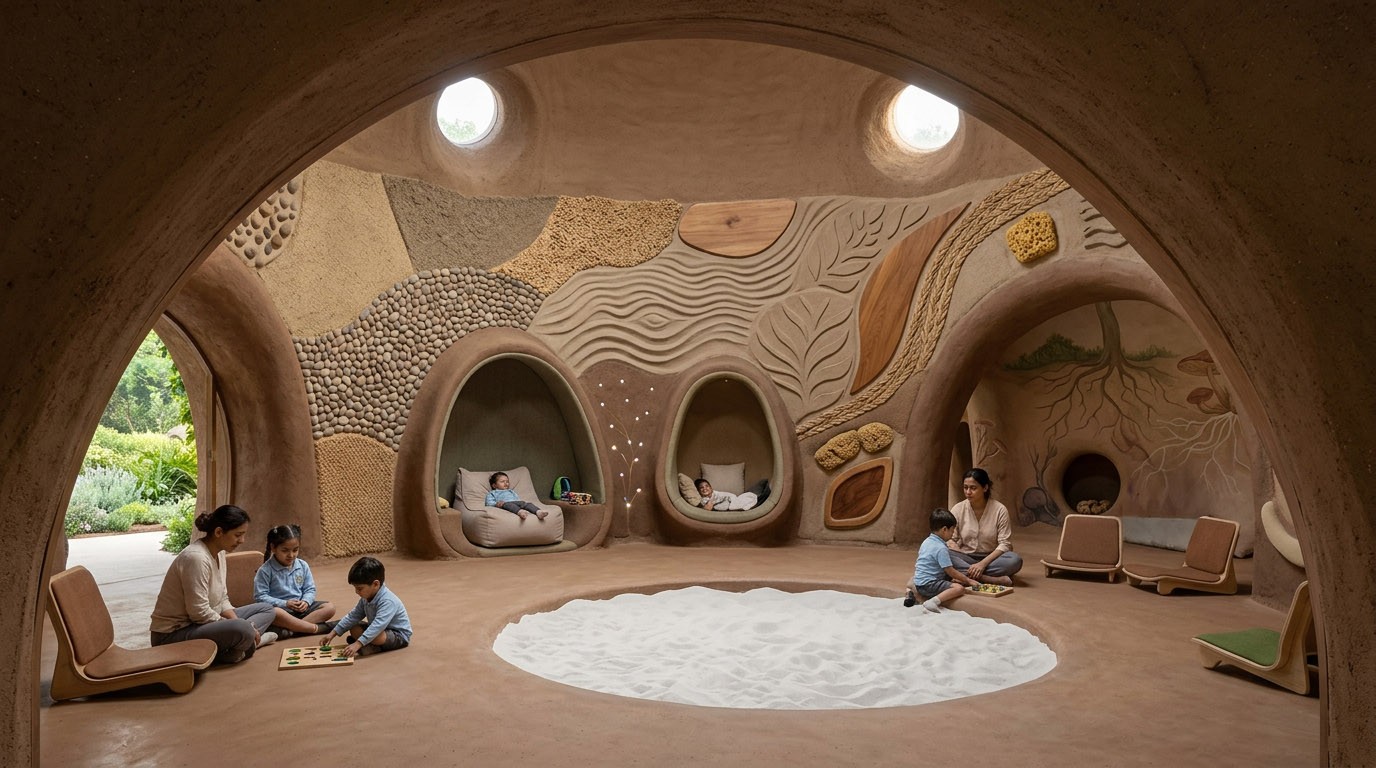
This project proposes a research-informed sensory garden pavilion designed for autistic children, where architecture, landscape, and play converge to create an environment of comfort, curiosity, and agency. The design prioritizes non-verbal interaction, sensory regulation, and exploratory movement. the pavilion is composed as an open-ended environment that supports different modes of engagement — solitude, observation, tactile play, movement, and social interaction. Layered pathways, textured surfaces, soft transitions, planting, filtered light, and acoustic modulation work together to reduce overstimulation while encouraging intuitive exploration. the pavilion is composed as an open-ended environment that supports different modes of engagement — solitude, observation, tactile play, movement, and social interaction. Layered pathways, textured surfaces, soft transitions, planting, filtered light, and acoustic modulation work together to reduce overstimulation while encouraging intuitive exploration.